Finding Your People: Why Belonging at School Is Harder for Some DC Students — And What's Actually Helping
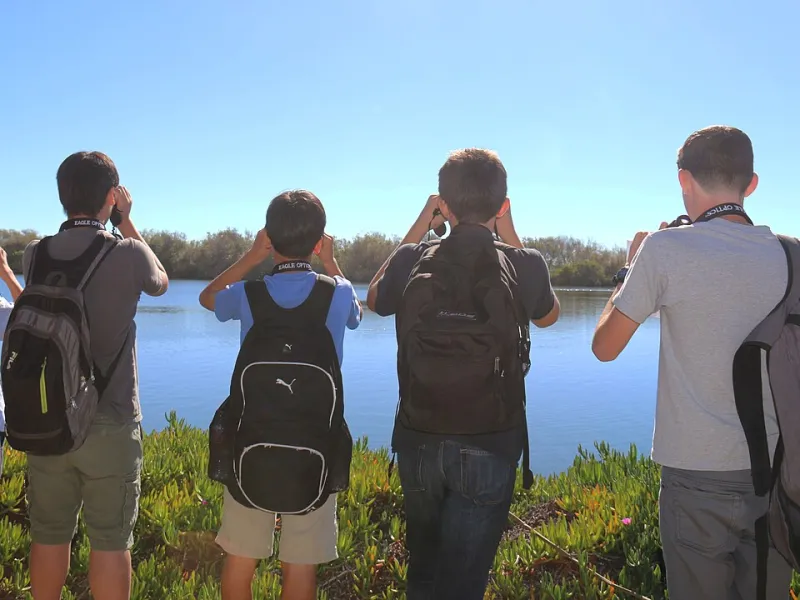
Photo: Ashley Spratt, photographer, US Fish and Wildlife Service. Pacific Southwest Region USFWS from Sacramento, US, Public domain, via Wikimedia Commons
Ask a DC student what makes school hard, and you might be surprised by the answer. It's often not the math tests or the reading assignments. It's walking into the cafeteria and not knowing where to sit. It's feeling invisible in a hallway full of people. It's being new to a school where every social group already has its walls built up.
Belonging — that feeling of being genuinely accepted and valued by the people around you — turns out to be one of the strongest predictors of student success. Not just social success. Academic success. Mental health. Whether a kid shows up. Whether they stay.
And right now, across Washington DC schools, the belonging gap is real.
The Social Landscape of DC Schools
DC's school system is unusually complex. With a robust school choice ecosystem, students often attend schools far from their home neighborhoods, which means they're not necessarily surrounded by kids they grew up with. A student in Ward 8 might commute to a charter school in Ward 2. A student from a tight-knit community might walk into a school where everyone else seems to already have their crew.
For students who are new to a school — whether through the lottery system, a mid-year transfer, or a family move — the social terrain can feel especially steep.
"I transferred in tenth grade and it felt like everyone already had their five best friends since sixth grade," said one DC high schooler who asked not to be named. "People were nice enough, but I ate lunch alone for like two months. That messes with you."
This experience is more common than schools tend to acknowledge. And it doesn't only affect transfer students. Students who are part of marginalized groups — LGBTQ+ students, students with disabilities, students who are the only one of their race or cultural background in a classroom — often describe a similar experience of surface-level inclusion that doesn't quite reach belonging.
Cliques, Exclusion, and the Quiet Kind of Bullying
Most conversations about school social dynamics focus on overt bullying. But the belonging gap is often maintained by subtler forces: social cliques that aren't hostile, just closed. Group projects where certain students are always picked last. Lunch tables with unspoken reserved signs. School clubs that technically welcome everyone but are culturally inaccessible to students who don't already fit the mold.
"It's not like anyone was mean to me," said a sophomore at a Northwest DC public school. "It's more like I just... didn't exist to most people. And after a while, you start to wonder if something is wrong with you."
Researchers call this "social invisibility," and its effects on mental health are well-documented. Students who feel socially invisible at school are more likely to experience depression and anxiety, more likely to disengage academically, and more likely to drop out.
The stakes are high — and the solutions aren't always obvious.
What Evidence-Based Belonging Looks Like
Some DC schools are taking this seriously, and the approaches that seem to work share a few common characteristics.
Structured peer connection from day one. Schools that deliberately build in relationship-forming time during the school day — not just "free time," but structured activities that require students to interact across social groups — tend to see better belonging outcomes. Advisory periods, mixed-group projects, and peer mentorship programs are all tools that reduce the randomness of social connection.
Identity affirmation. Students are more likely to feel like they belong when they see themselves reflected in the school's culture — in the curriculum, in the staff, in the extracurricular offerings. Schools with active affinity groups for Black students, Latino students, LGBTQ+ students, and other communities consistently report that those spaces help students feel safer and more invested in the broader school community.
Adult relationships that go beyond the transactional. Research by the Search Institute and others consistently finds that students who have at least one trusted adult at school — someone who knows their name, notices when they're off, and genuinely cares — are significantly more likely to feel a sense of belonging. This sounds simple, but in schools where teachers are stretched thin and counselor ratios are high, it doesn't happen automatically.
One DCPS middle school counselor described a program her school piloted where every staff member — including non-teaching staff like custodians and front office workers — was assigned a small group of students to check in with weekly. "It sounds small, but kids who'd been invisible started saying they felt like someone actually knew them," she said.
Restorative practices over punitive ones. Schools that rely heavily on suspensions and exclusionary discipline tend to have worse belonging outcomes, particularly for Black students and students with disabilities who are disproportionately affected by those practices. Schools shifting toward restorative circles and community-building approaches report not just fewer behavioral incidents, but stronger peer relationships overall.
The Role of Mental Health and the Limits of Therapy
It's tempting to frame the belonging gap as a mental health issue that schools should address through counseling. And yes, access to mental health support matters. But belonging isn't primarily a clinical problem — it's a structural one.
A student who feels socially isolated doesn't necessarily need therapy. They need a school environment that actively works to include them. The distinction matters because it shifts responsibility from the individual student to the institution.
That said, schools that have integrated social-emotional learning (SEL) into the school day — not as a standalone program but as a thread woven through classroom culture — tend to see students who are better equipped to navigate social complexity, express their needs, and build genuine friendships.
What Families Can Watch For
If you're a DC parent wondering whether your child is struggling with belonging, here are some signs worth paying attention to:
- Reluctance to go to school that isn't explained by academic anxiety
- Vague answers about who they eat lunch with or hang out with at school
- A significant drop in enthusiasm for school activities they previously enjoyed
- Increased time at home without social plans, particularly in middle and high school
If something feels off, it's worth a direct conversation — not "do you have friends?" but "what does lunch feel like? Who do you feel most comfortable with at school?"
And if your child's school doesn't seem to prioritize belonging as part of its culture, that's worth raising at the next PTA meeting or parent-teacher conference. Academic outcomes matter. But a student who doesn't feel like they belong is already at a disadvantage that no test score can fully capture.