Democracy's Backyard: Are All DC Students Getting a Real Civics Education?
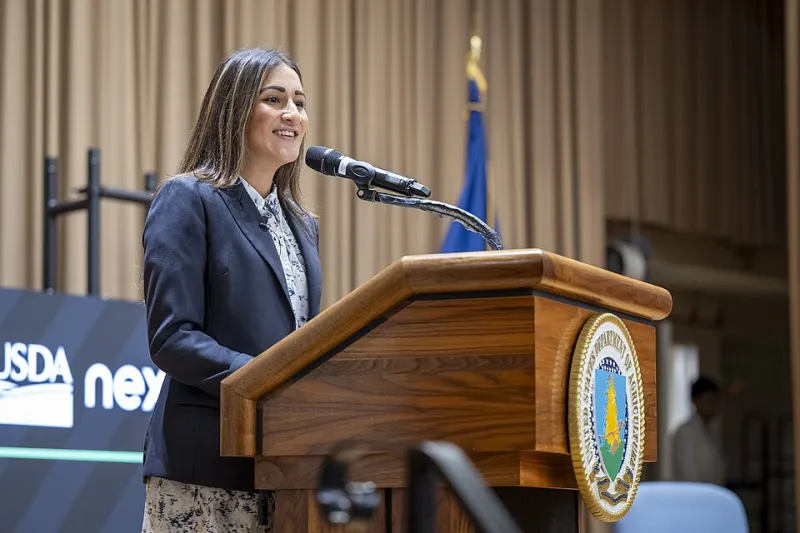
Photo: USDAgov, Public domain, via Wikimedia Commons
Washington DC is unlike any other school district in the country. Where else can a middle schooler walk to the Library of Congress on a Tuesday afternoon, or watch a Senate committee hearing as a field trip? The city's proximity to federal institutions, nonprofits, and advocacy organizations creates an almost unfair advantage in civic education — at least in theory.
But talk to families across different DC neighborhoods, and a more complicated picture emerges. The opportunities exist. The question is who's actually getting them.
What "Civics Education" Even Means in DC
For some schools, civics is a standalone class where students learn how a bill becomes a law and maybe write a letter to their councilmember. For others, it's a living, breathing part of the school day — mock trials, legislative simulations, internships at city agencies, and regular visits to hearings on Capitol Hill.
Teachers in higher-resourced schools often describe a kind of embedded civic culture. Students are encouraged to see themselves as participants in democracy, not just spectators. Meanwhile, teachers at schools in Wards 7 and 8 frequently mention a different reality: fewer field trip funds, fewer connections to government offices, and a curriculum that's more about covering standards than building civic identity.
"We want to take our kids to the Wilson Building, to committee hearings, to everything this city has to offer," one Southeast DC teacher told us. "But when you're scrambling for bus money and chaperones, those trips don't always happen. And when they don't happen year after year, kids start to feel like those spaces weren't built for them."
The Internship Pipeline Problem
One of DC's most distinctive civic education assets is access to government internships and fellowship programs for high school students. Congressional offices, federal agencies, and DC government departments regularly host student interns. But families who don't already know how to navigate these systems — or who lack a school counselor with the bandwidth to guide them — often miss out entirely.
Research consistently shows that students who participate in civic internship programs are more likely to vote as adults, more likely to engage in community organizations, and more likely to pursue careers in public service. So when access to those programs skews toward students at well-connected schools in higher-income neighborhoods, the long-term implications go far beyond high school.
Several DC families told DC School Hub that they had no idea government internship programs existed until their kids were already juniors — too late to build the application profile some programs require.
"My daughter's school just didn't have anyone pushing kids toward those opportunities," said one parent from Northeast DC. "At her friend's school across town, the counselors were actively recruiting students for DC government programs. Same city, totally different experience."
When Civic Education Gets Political
There's another layer to this conversation that doesn't always get named directly: the content of civics instruction itself. Teaching students about democracy, local governance, and civic participation sounds neutral on its face. But families across DC don't always agree on what that should look like in practice.
Some parents have raised concerns that certain schools lean into advocacy-oriented civic education — encouraging students to attend protests, contact elected officials about specific issues, or engage with community organizing. Others feel their children's schools are too passive, treating civics as historical fact-memorization rather than active preparation for participation.
The tension is real, and it doesn't break cleanly along political lines. Some progressive families in upper Northwest DC have expressed discomfort with what they see as partisan framing in civic programs. Some conservative-leaning families in other parts of the city have said they actually want more engagement, not less — they just want it to feel balanced.
Schools are trying to thread a difficult needle, and not all of them are doing it with the same level of intentionality.
What Strong Civic Programs Actually Look Like
A handful of DC schools have built civic education models that are worth paying attention to. At several charter schools, students participate in structured "community problem-solving" projects where they identify a neighborhood issue, research it, meet with local officials, and present solutions to a real audience. At some traditional public schools, partnerships with organizations like iCivics and Generation Citizen have brought interactive, discussion-based civic learning into classrooms that previously had nothing beyond a textbook.
The common thread in programs that seem to work? Students feel like their participation matters. Not as a simulation, but as something real.
"When my students went to a DC Council hearing and actually testified about their school's facilities, something shifted," said a Ward 5 social studies teacher. "They stopped thinking of government as something that happens to other people. They started thinking of it as something they could actually touch."
What Families Can Do
If you're a DC parent wondering whether your child's school is providing meaningful civic education, here are some concrete starting points:
- Ask the principal or curriculum coordinator what the school's civics or social studies scope and sequence looks like, and whether there are community engagement components built in.
- Look into DC-specific programs like the DC Bar Foundation's Law-Related Education program, the DC Youth Advisory Council, or the Office of the State Superintendent of Education's student engagement initiatives.
- Connect with your Advisory Neighborhood Commissioner (ANC) — many ANCs are happy to visit schools or host student groups, and it costs nothing.
- Advocate at the school level for field trip funding to be prioritized for civic experiences, not just cultural ones.
DC's geographic position is a genuine asset. Every student in this city should have the chance to feel like the machinery of democracy is something they can touch, question, and eventually shape. Right now, too many don't.