Nightly Battles at the Kitchen Table: DC Families and Teachers Can't Agree on How Much Homework Is Enough
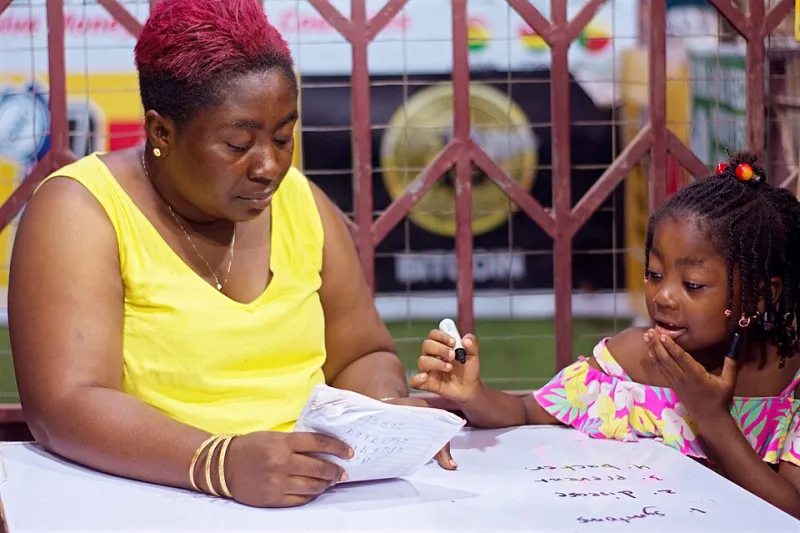
Photo: Kwameghana(Bright Kwame Ayisi), CC0, via Wikimedia Commons
It's 9:30 on a Tuesday night. A fourth grader in Petworth is still hunched over a math worksheet, her mom pacing the kitchen with a cold cup of coffee. Across town in Capitol Hill, a high school junior is on his third hour of AP reading, wondering if he'll get to bed before midnight. Meanwhile, their teachers are grading papers and genuinely believing they've assigned a reasonable amount.
This is the homework war — and it's playing out in households all across Washington DC every single school night.
The tension isn't new, but it's getting louder. DC parents are pushing back on heavy homework loads, citing stress, lost family time, and exhausted kids. Teachers and school administrators are defending academic rigor, pointing to achievement gaps and college readiness pressures. And somewhere in the middle, researchers have been quietly publishing findings that neither side is totally comfortable with.
What DC Schools Are Actually Assigning
Homework policies in DC vary wildly depending on whether your child attends a traditional DCPS school, a charter school, or a private institution. There's no district-wide mandate dictating exactly how much homework teachers must assign — which means the experience from one classroom to the next can look completely different.
DCPS does have general guidance suggesting teachers follow the "10-minute rule," a widely referenced benchmark that recommends roughly 10 minutes of homework per grade level per night. That means a third grader should have around 30 minutes of work, while a tenth grader might have around 100 minutes. In practice, though, families report that reality rarely matches those guidelines.
A 2023 survey of DC-area parents conducted by a local education advocacy group found that nearly 58% of elementary school parents said their kids regularly spent more than an hour on homework each night. Among middle schoolers, that number climbed to over 70%. High school families weren't even surprised anymore — many had simply accepted that three to four hours of nightly work was the norm.
Charter schools tend to operate with even more autonomy on this front. Some high-performing charter networks are known for assigning substantial homework as part of their academic model. Others have moved in the opposite direction, scaling back assignments in favor of project-based learning and in-class practice.
Teachers Are Not the Villains Here
It's easy to frame this as parents versus teachers, but most educators aren't assigning homework out of indifference to kids' wellbeing. Many DC teachers are working within pacing guides and curriculum frameworks that leave them feeling like homework is the only way to cover everything they're expected to cover.
"I have 28 kids in my class and 45 minutes to teach a math concept," said one fifth-grade teacher at a Northeast DC public school who asked to remain anonymous. "If I don't send something home, a third of my class won't be ready for the next lesson. I'm not trying to ruin anyone's evening."
That pressure is real. DC teachers face accountability metrics tied to standardized test performance, and with limited instructional time during the school day, homework can feel like a necessary extension of learning rather than an optional add-on.
At the high school level, Advanced Placement and dual-enrollment courses come with their own built-in homework expectations — ones that are largely set by College Board or university syllabi rather than individual teacher discretion. A DC student taking four AP classes is essentially managing a part-time college courseload on top of their regular school day.
What Parents Are Actually Saying
Parent frustration in DC tends to cluster around a few consistent themes: homework that feels busywork-heavy rather than meaningful, assignments that require parental involvement that not every family can provide, and the simple reality that kids are tired.
"My son gets home at 4:15 after taking two buses," said one parent from Ward 7. "By the time he eats and decompresses, it's almost 6. Then we're fighting over homework until 9. He's not retaining anything at that point. He's just going through the motions."
That experience resonates with a lot of DC families, particularly those navigating longer commutes to school choice programs outside their neighborhood. When travel time eats into the afternoon, the homework window shrinks — but the assignment load doesn't.
Parents of kids with learning differences or IEPs often face an even steeper climb. What takes a neurotypical student 20 minutes might take their child an hour, and that multiplies across every subject. Some families describe spending entire weekends catching up on work that was supposed to be done on weeknights.
What the Research Actually Says
Here's where things get interesting — and a little inconvenient for both camps.
The research on homework effectiveness is genuinely mixed, and it shifts significantly depending on the age group you're looking at. Harris Cooper, a Duke University researcher who has spent decades studying homework, found that for elementary school students, there's essentially no consistent link between homework and academic achievement. For middle schoolers, the relationship is modest. It's not until high school that homework shows a more reliable connection to learning outcomes — and even then, only up to a point. After about two hours per night, returns diminish fast.
What the research does consistently show is that homework quality matters far more than quantity. Rote worksheets that ask students to repeat a skill they already demonstrated in class don't move the needle much. Assignments that ask kids to apply concepts, make connections, or prepare for upcoming discussions tend to be more valuable.
There's also a growing body of research on the equity dimensions of homework. Students from lower-income households are less likely to have quiet study spaces, reliable internet access, or adults at home who can help with complex assignments. In a city as economically stratified as DC, that's not a small footnote — it's a central issue.
Finding a Middle Ground in DC
Some DC schools are already trying to thread this needle. A handful of DCPS elementary schools have experimented with "homework-lite" models that focus exclusively on reading for 20 minutes a night and occasional math fact practice. Early feedback from those schools has been positive, with teachers reporting that students come in more rested and more engaged.
At the secondary level, some teachers are shifting toward "flipped classroom" approaches — delivering instruction through short videos students watch at home, then using class time for practice and discussion. It reframes what homework means without eliminating it entirely.
For families who feel like the current load is unsustainable, most school counselors and parent advocates recommend starting with a direct, non-confrontational conversation with the teacher before escalating to administration. Framing it as "here's what I'm observing at home" rather than "you're assigning too much" tends to land better and opens up more productive dialogue.
The Bigger Picture
The homework debate in DC isn't really just about worksheets and reading logs. It's about what we believe school is for, what childhood should look like, and who carries the burden when the school day isn't long enough to do everything we're asking it to do.
There's no single right answer — and anyone who tells you there is probably hasn't sat at a kitchen table at 9:30 on a Tuesday night. But the conversation is worth having, loudly and honestly, between families and the schools that serve them.