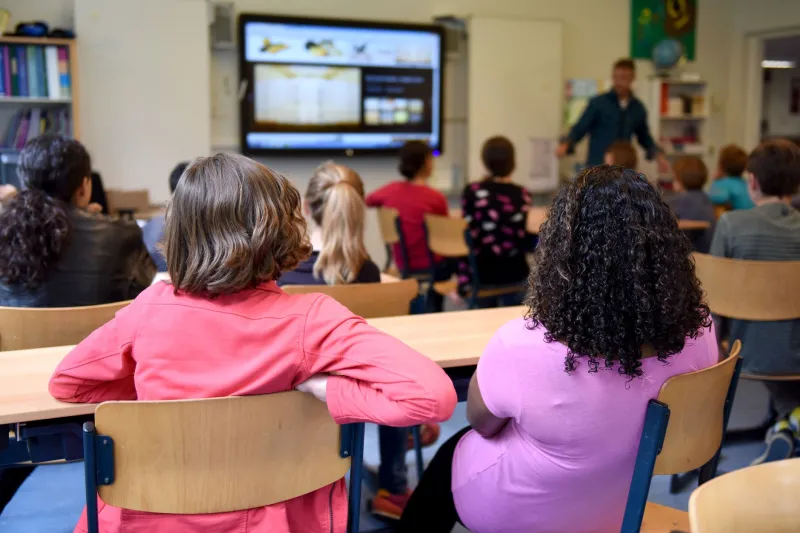
Beyond the Textbook: The Life Skills DC Schools Are Missing — And What Parents Can Do About It
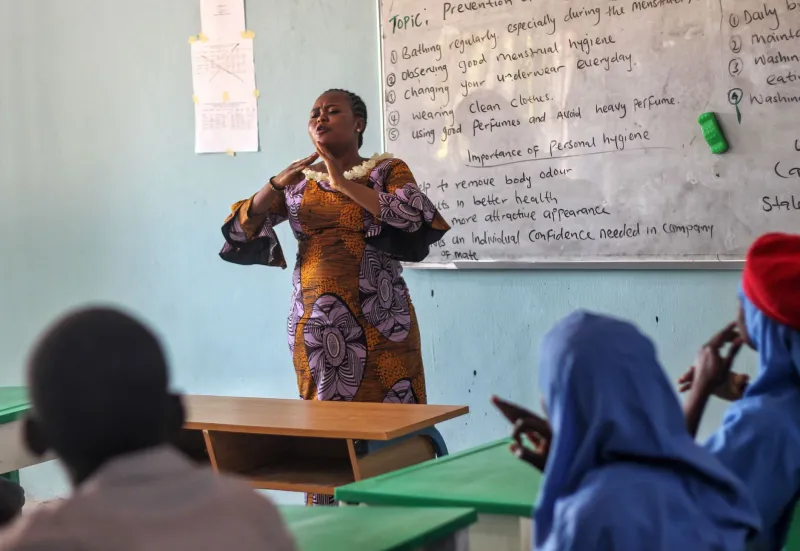
Ask most DC parents what they want for their kids, and you'll hear a pretty consistent list: good grades, college acceptance, maybe a standout extracurricular or two. But dig a little deeper and the conversation shifts. What about knowing how to manage a paycheck? Understanding what anxiety actually feels like — and what to do about it? Navigating a conflict without blowing everything up?
These are the skills that tend to determine how well someone actually does in adult life. And yet, for the most part, they're nowhere in the official curriculum.
That gap — between what schools formally teach and what kids genuinely need to thrive — is what educators sometimes call the "hidden curriculum." It's not a conspiracy. It's a structural reality, shaped by standardized testing requirements, limited instructional time, and a long history of assuming families will cover the rest. But in a city as diverse and fast-moving as Washington DC, that assumption leaves a lot of kids behind.
What's Actually Missing
Let's start with financial literacy. According to a 2023 report from the Council for Economic Education, DC does not require a standalone personal finance course for high school graduation. Students might pick up bits and pieces in a math class or an elective, but there's no guarantee. That means plenty of DC teenagers are heading into adulthood without a solid understanding of credit scores, student loan interest, or even how to read a pay stub.
Mental health education is another significant blind spot. While DC has made strides in expanding school counselor access — particularly after the disruptions of the pandemic years — formal instruction around emotional regulation, stress management, and mental health literacy is still inconsistent across schools. Some students graduate knowing how to calculate the quadratic formula but having no real vocabulary for what they're feeling when things get hard.
And then there's what you might call civic and practical adulting skills: understanding tenant rights, knowing how to register to vote, basic first aid, digital privacy, even how to write a professional email. These things matter enormously in real life. They rarely show up on a standardized test.
DC Schools That Are Doing Things Differently
To be fair, some schools in the District are actively working to close these gaps — and it's worth knowing who they are.
Several DC public charter schools have woven social-emotional learning (SEL) into their daily routines in meaningful ways. Rather than treating it as a once-a-week check-in, these schools embed emotional literacy into advisory periods, classroom culture, and even how conflicts between students are handled. The result is that kids build self-awareness as a habit, not an afterthought.
On the financial literacy front, a handful of high schools — particularly some in Wards 7 and 8 — have partnered with local credit unions and nonprofits to bring real-world money management into the classroom. Students in these programs learn to build mock budgets, understand compound interest, and even practice job interviews. It's practical in a way that sticks.
Some schools have also started incorporating mindfulness and stress-reduction techniques, especially at the middle school level where anxiety tends to spike. These aren't fringe experiments — research consistently shows that kids who learn to manage stress perform better academically and socially over time.
The challenge is that these programs are scattered and uneven. Whether your child has access to them depends heavily on which school they attend and, frankly, which ward you live in.
What Parents Can Actually Do
Here's the honest truth: waiting for the system to catch up isn't a strategy. If you want your kids to have these skills, you'll likely need to be intentional about building them at home — at least for now.
Start money conversations early. You don't need to be a financial expert to talk about money with your kids. Something as simple as involving them in grocery budget decisions or explaining a utility bill goes a long way. For older teens, apps like Greenlight or Current can make hands-on money management more accessible. DC also has free resources through the DC Department of Insurance, Securities and Banking that families can tap into.
Make mental health part of everyday conversation. Normalize talking about feelings — not just when something goes wrong, but routinely. Ask your kids how they're doing emotionally, not just academically. If your child's school has a counselor, get to know them. And if your child is struggling, DC's Department of Behavioral Health has community-based supports specifically for young people.
Use the city as a classroom. Washington DC is genuinely one of the best places in the country to learn about civics, history, and community. Take advantage of it. Visit a city council meeting. Walk through a neighborhood in transition and talk about what's changing and why. Volunteer together. These experiences build the kind of contextual understanding that no worksheet can replicate.
Connect with community organizations. Groups like DC Scores, Byte Back, and the Latin American Youth Center offer programming that goes well beyond what schools provide — from financial coaching to digital skills to leadership development. Many of these programs are free or low-cost.
Advocate at the school level. If your child's school doesn't offer financial literacy or robust SEL programming, say something. Attend a PTA meeting. Talk to the principal. Connect with other parents who feel the same way. DC families have real power to shape school priorities when they organize around them.
The Bigger Picture
None of this is meant to pile more onto parents who are already stretched thin. The reality is that families in DC are navigating wildly different circumstances, and the expectation that every household can simply supplement a school's curriculum isn't equally fair across the board.
That's exactly why advocating for systemic change matters. Financial literacy requirements, stronger SEL frameworks, and consistent mental health education shouldn't be luxuries available only at the right school or in the right zip code. They should be baseline expectations for every DC student.
In the meantime, knowing the gaps exist is the first step. The more aware families are of what's missing, the better positioned they are to ask for more — from schools, from policymakers, and from each other.
Because the hidden curriculum? It doesn't have to stay hidden.