Why DC School Lottery Winners Aren't Always the Luckiest Families — And What You Can Do to Tip the Odds
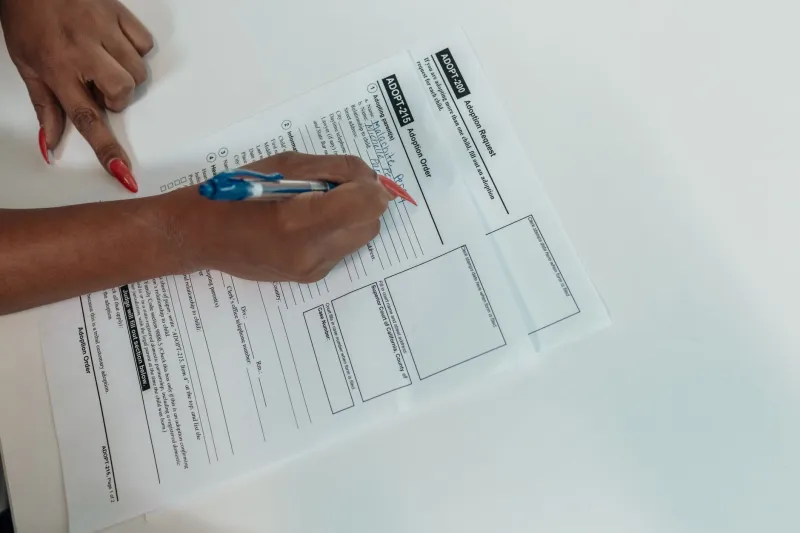
Every January, a familiar anxiety settles over thousands of Washington DC households. Parents refresh their inboxes. Kids ask questions adults aren't sure how to answer. And somewhere behind the scenes, an algorithm quietly sorts through tens of thousands of applications to determine which children get into which schools.
If you've ever felt like the DC school lottery is a black box — confusing, opaque, and maybe a little unfair — you're not imagining things. It is complicated. But it's not entirely random. And that distinction matters more than most families realize.
How the DC School Choice System Actually Works
Let's start with the basics. DC operates one of the most complex school choice systems in the country, largely because it has two parallel systems running side by side: traditional public schools managed by DC Public Schools (DCPS) and public charter schools, which operate independently but are still publicly funded and tuition-free.
Families apply to both through the My School DC unified lottery, which opened in the 2015-16 school year to simplify what had been a genuinely chaotic process. Before My School DC, families had to apply to each charter school separately, often on different timelines. The unified system was a genuine improvement — but it didn't eliminate the complexity underneath.
When you submit your application through My School DC, you're essentially ranking your preferred schools in order. The system then runs a lottery that assigns students to seats based on a combination of random numbers and preference categories. Those preference categories are where things get interesting.
Preference Points: The Hidden Structure Inside the Lottery
Here's what a lot of families don't know: the lottery isn't a pure coin flip. Schools give priority to certain applicants before the random draw even begins. These preferences vary by school type and grade level, but some of the most common ones include:
- Sibling preference: If your older child already attends a school, your younger child typically gets priority for a seat there. This is one of the strongest and most consistent preferences across both DCPS and charter schools.
- In-boundary preference: For DCPS schools, students who live within the school's attendance boundary get first priority. This is why your neighborhood school is usually your safest bet — though it's not a guarantee at every school.
- Returning student preference: Current students at a school generally have priority to stay enrolled the following year.
- School-specific preferences: Some charter schools give priority to children of staff members, students from certain feeder programs, or applicants who meet other criteria defined in the school's charter.
Understanding these tiers can genuinely change how you approach your application. A family that knows their address falls inside a sought-after school's boundary is in a very different position than one applying from outside it — even if both families list that school as their first choice.
What's Truly Random — And What Isn't
Once preference categories are applied, the remaining seats are filled by random lottery number. Every applicant gets a unique lottery number generated at random, and when it comes to competing for the same seat without a preference advantage, that number is what decides your fate.
So yes — there's a real element of chance here. Some years, a family with no preferences at all gets lucky and lands a coveted spot at a high-demand school. Other years, families who did everything right still end up on a waitlist. That's genuinely frustrating, and it's worth acknowledging that the system does produce outcomes that can feel arbitrary.
But here's the thing: the families who tend to feel most blindsided are often the ones who didn't know the preference structure going in. They applied to schools where they had no preference advantage, listed only highly competitive options, and then were surprised when the odds didn't break their way.
Practical Strategies to Maximize Your Chances
So what can you actually do? Quite a bit, it turns out.
Know your boundary school. Look up which DCPS school you're zoned for using the My School DC boundary tool. Even if it's not your dream school, listing it on your application gives you a preference-backed safety net. You're not locked into attending if you get in somewhere else, but it's a meaningful backup.
List more schools, not fewer. One of the most common mistakes DC families make is submitting a short list of only their top two or three choices. My School DC allows you to rank up to 12 schools. Use that space. The more schools you list, the more chances the algorithm has to find you a match — and the less likely you are to end up with no assignment at all.
Think realistically about demand. Some DC schools are extraordinarily competitive, with waitlists that stretch into the hundreds. If you're applying to one of those schools without any preference advantage, it's not pessimistic to assume you won't get in — it's just math. Balance your list with schools that are a genuine fit and where you have a reasonable shot.
Apply on time — and early if possible. The My School DC lottery has a defined application window, usually running from early December through late February for the following school year. Missing the deadline doesn't just mean you're late; it means you're out of the main lottery entirely and left scrambling for whatever seats remain.
Check sibling preferences before your youngest starts kindergarten. If you have an older child in a school you love, that sibling preference is one of the most powerful tools available to you. Plan around it.
Why the System Still Feels Unfair (Even When You Know the Rules)
Even armed with all this information, plenty of families will still end up somewhere they didn't choose. And honestly? That's a real problem with the system, not just a perception issue.
DC's school quality is uneven. The gap between the most sought-after schools and the least popular ones reflects deeper inequities in resources, facilities, and outcomes. When families compete fiercely for a limited number of seats at high-performing schools, someone has to lose — and those losses aren't distributed evenly across income levels or neighborhoods.
Families with more time, more access to information, and more flexibility to research their options tend to navigate the lottery more successfully. That's not a knock on any individual parent — it's just a structural reality worth naming.
Advocacy organizations like DC Students Succeed and the DC Charter School Alliance publish resources to help families understand the process, and My School DC itself has a multilingual helpline and in-person support events. If you're feeling lost, those are real places to turn.
The Bottom Line
The DC school lottery is part algorithm, part preference system, and yes, part luck. But the families who go in with a clear strategy — who know their preferences, diversify their lists, and understand the competitive landscape — are consistently better positioned than those who treat it like a pure raffle.
It won't always go the way you hope. But it doesn't have to feel like a mystery either.